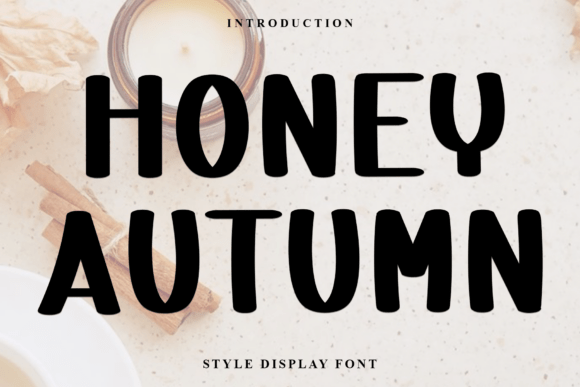
Honey Autumn Font: A Display Typeface for Digital Designers
As a web designer, choosing the right typeface can make or break your layout’s visual impact and user experience. Honey Autumn, a display font with a soft yet distinctive character, offers a unique solution for designers who want to elevate their digital projects without compromising on readability. Whether you're crafting a hero section for a landing page or designing brand-focused content for a boutique online store, Honey Autumn brings warmth, elegance, and personality to the table.
Honey Autumn for Hero Sections in Modern Web Design
In today’s fast-paced digital landscape, first impressions matter. Honey Autumn is ideal for hero sections where you need to capture attention immediately. Its eye-catching strokes and subtle texture create an inviting focal point that aligns well with lifestyle brands, creative agencies, and seasonal campaigns. When used in large sizes, it adds a sense of authenticity and charm that can enhance storytelling through typography.
To ensure optimal readability at this scale, consider using Honey Autumn on high-contrast backgrounds—like dark tones against light text—to maintain clarity across devices. Avoid overusing alternates in headers unless they contribute to a specific mood or tone. For instance, pairing it with a minimalist sans serif body font like Montserrat or Lato helps balance its ornate nature and maintains a clean hierarchy.
Honey Autumn in Conversion-Focused Landing Pages
Landing pages require a delicate balance between aesthetics and usability. Honey Autumn shines when used for call-to-action buttons or headline text that needs to stand out without overwhelming users. The font’s softness makes it approachable, while its uniqueness ensures it doesn’t get lost in a sea of generic typefaces. This blend is especially powerful for SaaS startups or product launch pages aiming to build trust and curiosity simultaneously.
When implementing Honey Autumn in CTA areas, keep the weight consistent and avoid mixing too many variations within one section. Use it sparingly for key phrases such as “Start Your Free Trial” or “Join Our Community” to highlight urgency and importance. Also, test its legibility on mobile screens by ensuring adequate spacing and line height, even in smaller sizes.
Using Honey Autumn for Brand Identity and Logo Design
A strong brand identity often hinges on typography. Honey Autumn is a premium font that works exceptionally well for logo design and branding assets due to its meaningful character shapes and warm appeal. It's particularly suited for industries like fashion, wellness, food, and lifestyle, where the brand tone needs to reflect craftsmanship and care.
For digital logos, stick to the bolder weights of Honey Autumn to maintain visibility at various scales. Ensure that the font complements supporting elements like icons or imagery without clashing. If your brand uses a script or handwritten style elsewhere, Honey Autumn can serve as a more structured counterpart that still feels personal and authentic.
Honey Autumn for Creative Portfolios and Editorial Layouts
Creative professionals often rely on fonts that reflect their artistic flair. Honey Autumn fits perfectly into portfolio sites and editorial designs where visual interest meets professional polish. Its versatility allows it to be used in section headings, project titles, and even short captions that add a touch of sophistication.
When working with long-form content or blog posts, pair Honey Autumn with a neutral serif or sans serif font to preserve scannability. Limit its use to headers and subheaders to maintain a rhythm that guides the reader smoothly through the page. In grid-based layouts, its distinct shape helps differentiate content blocks, improving overall navigation and engagement.
Honey Autumn in Social Media Graphics and Banners
Social media graphics and banners demand bold, memorable visuals. Honey Autumn delivers both with its decorative accents and expressive letterforms. It’s perfect for Instagram carousels, Facebook ads, or YouTube thumbnails where the goal is to stop the scroll and communicate a message quickly.
Use it for main headlines but always check how it renders on different platforms and screen sizes. For maximum effectiveness, combine Honey Autumn with solid color overlays or minimal gradients. Pairing it with a modern sans serif in body copy ensures that your message remains clear and actionable, even with intricate design elements.
Enhancing Visual Hierarchy with Honey Autumn in UI Elements
In UI design, visual hierarchy is crucial for guiding user behavior. Honey Autumn can help establish that hierarchy by serving as a standout element in app screens, dashboard headings, or modal windows. Its unique stroke contrast sets it apart from standard system fonts, making it useful for feature highlights or promotional banners within apps or software interfaces.
However, because it's a display font, avoid using it for small interface elements like form labels or menu items. Instead, reserve it for larger, less frequent UI components where its personality can shine. Always test how it looks alongside other UI elements to ensure it supports—not hinders—navigation and comprehension.
Honey Autumn for Seasonal Campaigns and Niche Markets
Fonts with a thematic feel are invaluable during seasonal marketing efforts. Honey Autumn naturally evokes warmth and coziness, making it a great fit for fall-themed campaigns, holiday promotions, or any project targeting a niche audience that values handcrafted aesthetics. From autumn-inspired e-commerce banners to cozy coffee shop websites, this font adds a layer of emotional resonance that stock typefaces rarely achieve.
Its vario options (if available) allow for subtle tonal shifts that can adapt to changing campaign themes. For example, a lighter variant might suit a softer brand aesthetic, while a bolder version could work well for event announcements or limited-time offers. These variations provide flexibility without sacrificing the font’s core identity.
Honey Autumn and Multilingual Support in Global Projects
If you're designing for international audiences, verify whether Honey Autumn includes multilingual support. Many display fonts focus only on Latin characters, which can limit their usefulness in global contexts. Assuming the font offers extended language coverage, it becomes a valuable asset for branded web experiences targeting non-English-speaking markets.
Keep in mind that decorative fonts may not render all glyphs consistently across languages. Test alternate characters and diacritics before finalizing a design. If necessary, supplement with a secondary font for certain languages while maintaining the visual consistency of Honey Autumn throughout the rest of the site.
Practical Font Pairing Tips with Honey Autumn
Font pairing is an art in itself, and Honey Autumn benefits from thoughtful combinations. Since it has a soft, elegant feel, it pairs well with clean sans serifs like Helvetica Neue or Open Sans for body text. For a more editorial or luxury vibe, try combining it with a refined serif font such as Playfair Display or Merriweather.
Avoid pairing it with other highly stylized display fonts unless you're going for a very intentional look. Stick to one dominant display font per project to prevent visual clutter. If you're creating a digital brand kit, document these pairings so your team can maintain typographic harmony across all design assets.
Commercial Font Licensing Considerations
Before integrating Honey Autumn into your commercial web projects, make sure to review the licensing agreement. Many display fonts offer webfont licenses that cover usage in online stores, client websites, and digital templates—but specifics vary. Some versions may restrict embedding in CSS or require additional fees for multiple domains or large-scale deployments.
Always confirm that the license includes the styles and weights you plan to use. If you're building a SaaS platform or a course sales page, opt for a font license that explicitly covers dynamic or server-side rendering. This step ensures that your design choices remain legally sound and scalable as your business grows.
Responsive Typography with Honey Autumn
With the rise of mobile-first design, responsive typography must be taken seriously. Honey Autumn performs best in larger sizes, so structure your layout around its strengths. Use it in headers that scale appropriately on mobile, and ensure that it doesn't become pixelated or distorted when resized.
When applying it to small buttons or navigation menus, double-check legibility. You may find that a simpler fallback font is better for tiny text areas. But for larger UI components like banners, modals, or feature cards, Honey Autumn can deliver a polished and professional finish that elevates the entire design.
Creating a Consistent Online Presence with Honey Autumn
Consistency is key to building a recognizable brand. Honey Autumn helps unify your digital presence by offering a cohesive visual language across landing pages, email templates, and social media. Its unique but readable character set allows it to maintain a consistent tone while adapting to different formats and mediums.
Integrate it into your brand guidelines early on. Define where it will appear most frequently—such as in headers and signature lines—and specify how it should be paired with secondary fonts. This proactive approach ensures that every piece of content reinforces your brand’s voice and visual identity.
Honey Autumn for Product Launches and Course Sales Pages
Product launches and course sales pages rely heavily on persuasive design. Honey Autumn can give your messaging an extra layer of creativity and confidence. Use it for title stacks like “Welcome to the Journey,” “Unlock Your Potential,” or “Join the Movement”—phrases that benefit from a slightly whimsical yet professional touch.
Combine it with bold colors and white space to let the text breathe. On image-heavy sales pages, apply Honey Autumn as overlay text with transparent backgrounds or soft drop shadows. This technique keeps the font visible while allowing the imagery to remain the central focus.
Designing with Honey Autumn in Dark Mode and Light Themes
With the increasing popularity of dark mode, understanding how Honey Autumn behaves under different lighting conditions is essential. Its soft texture may show off beautifully on dark backgrounds, adding depth and richness to your layout. However, on light or pastel schemes, its contrast may need to be adjusted for optimal visibility.
Consider using a slightly darker shade for text in light themes and a lighter hue on dark ones. Testing across both modes will help you determine the best settings for accessibility and aesthetics. Remember, the goal is to ensure that the font enhances the user experience rather than detracts from it.
Why Honey Autumn Stands Out in the Fonts Market
The display font market is crowded, but Honey Autumn distinguishes itself through its balanced combination of style and functionality. Unlike overly embellished scripts or rigid geometric fonts, it strikes a chord between expressiveness and professionalism. This makes it suitable for a wide range of digital products—from personal blogs to enterprise-level branding kits.
What truly sets it apart is how it adapts to different applications without losing its essence. Whether you’re designing a cozy homepage header or a sleek app interface, Honey Autumn retains its charm and usability. That adaptability is what makes it a top choice among designers looking for a reliable, versatile font that tells a story.
Final Notes on Integrating Honey Autumn into Your Toolkit
As you evaluate new fonts for your next project, remember that Honey Autumn isn’t just another display typeface—it’s a tool for enhancing user emotion and design intention. Its soft, unique strokes and special character make it ideal for web designers who want to inject personality into their layouts without sacrificing clarity.
Whether you’re optimizing for conversions, building brand trust, or simply creating something visually engaging, Honey Autumn provides a foundation for success. Just be sure to test its performance in real-world scenarios and pair it wisely to maximize its impact.